
By José António Ferreira
From Pierre-Joseph Proudhon to John Locke, passing through Saint Thomas Aquinas, Karl Marx, and reaching back to Aristotle, the notion of property has shaped the political thought of those who govern and those who are governed, influencing the way cities and societies are organised.
Nowadays, there is a prevailing perception that private ownership translates into greater stewardship. This echoes arguments like those put forward by Saint Thomas Aquinas:
- property must necessarily be private, as people take better care of what belongs to them than what is held in common; society benefits when each person looks after their share;
- private property is essential to social order — a society in which “everything belongs to everyone” and there is no distinction between “mine” and “yours” is one in which conflict emerges as soon as scarcity appears.
This perspective is also upheld by Aristotle: “The more common a thing is to a greater number, the less care it receives. Each person is most concerned with what is his own; what is common receives less attention, and even less still if one assumes someone else will look after it.” (in Aristóteles, Política)
The words of Saint Thomas Aquinas and Aristotle deserve emphasis here, as political discourse and public perception of private property are deeply rooted in their thinking, thereby shaping housing policies. In particular, the relevant policies in this context: the transformation of families into homeowners and the resulting responsibility of future (financial) commitments that most cannot afford.
I will not embark on an extensive discussion of the concept of property. That would take up time and space unsuited to a brief reflection on what I intend to address: the unit-by-unit transfer of multi-unit public housing assets to their occupants and its most evident result — their progressive deterioration.
The digression proposed here is grounded in the empirical knowledge consolidated through the experience afforded, while the initial theoretical references help us better understand this dynamic. Power relations rooted in the coexistence of different property models, alongside neighbourly and community relations, strongly shape the management of these buildings, neighbourhoods, and urban blocks.
Examples abound, particularly visible today in the cities of Eastern and Southern Europe. When families in Spain became owners of a large part of the public housing stock in the 1950s and 60s— following the motto of José Luis Arrese y Magra, Minister of Housing (1957–1960): “—, they should, in theory, have assumed responsibility for maintenance and conservation, in line with Aquinas’s reasoning. Yet decline is precisely the state in which these buildings are now found. Similar processes occurred in Serbia and in most former socialist countries during the mass privatisations of the 1990s. The results of those policies confront us today with a stark reality. Portugal did not elude the vertigo — and it still doesn’t. In Porto, for example, the fragmented, unit-by-unit sale of municipal housing units to tenants in the early 2000s (following a timid policy launched in the late 1980s and early 1990s) has made it nearly impossible to undertake rehabilitation works in mixed-property buildings across seven neighbourhoods. The difficulty private owners face in paying their share of renovation costs effectively halts these operations — a stark contrast with what has been achieved in the remaining neighbourhoods, fully owned by the Municipality, which have been, and continue to be, systematically improved.
The underlying problem is clear: most families who purchased these homes did not overcome their entrenched cycles of poverty. Their financial capacity — and their ability to confirm Aquinas’s principles — is limited. The modest maintenance works, when they occur, are restricted to the interior of their own homes, leaving no resources for condominium contributions (where such structures even exist). Cities where these policies became widespread now face declining habitability and deteriorating urban landscapes, setting in motion a process of decay that is almost invariably inexorable. These dynamics, particularly in privatised former public housing estates, worsen the urban environment and deepen stigmas, further devaluing these territories socially and economically.
Here, in these disadvantaged territories, we are left only with Lynch’s hypothesis of “imageability”. It is far too little. Here, we need to act with propriety.
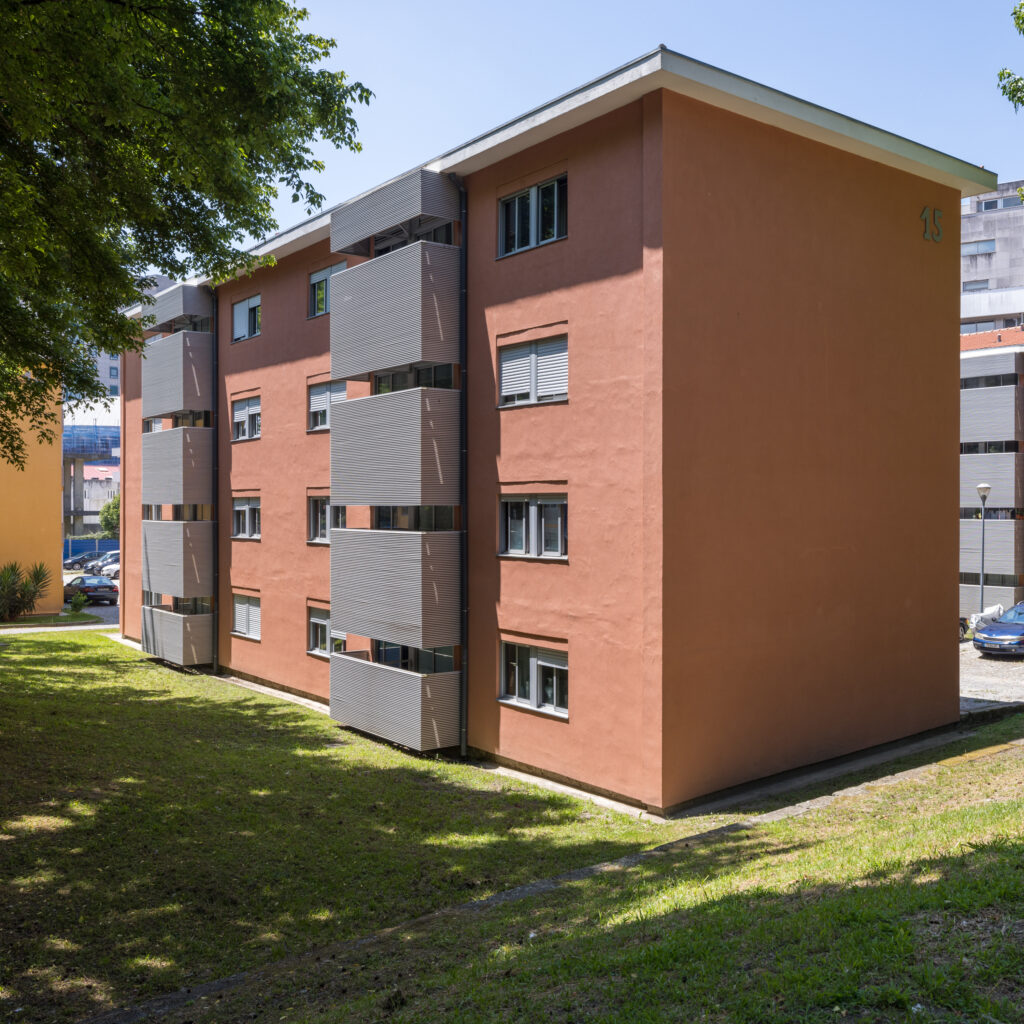
Photo credit: João Ferrand, June 2023
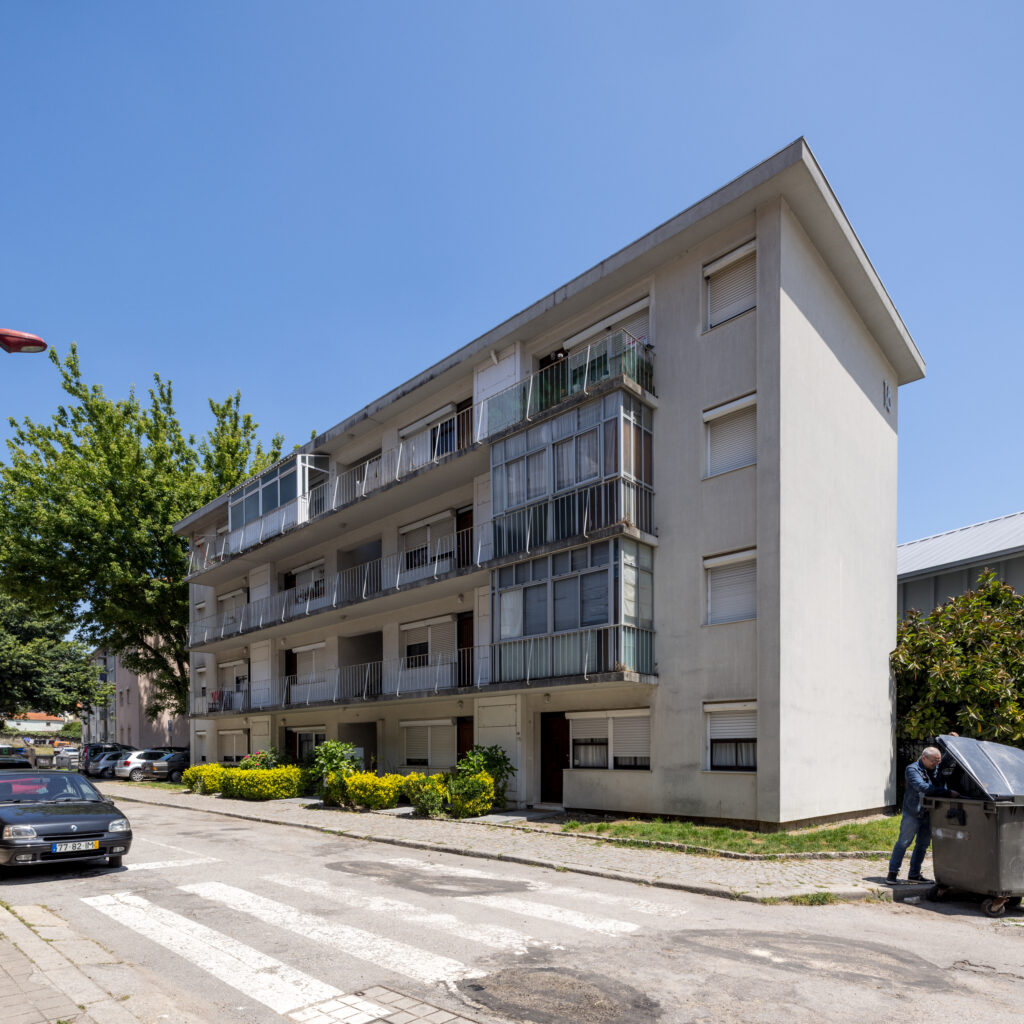
Photo credit: João Ferrand, June 2023