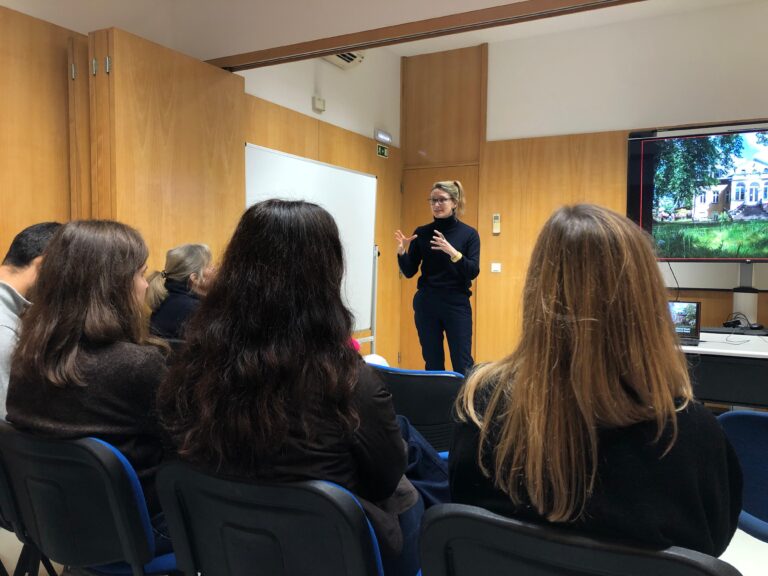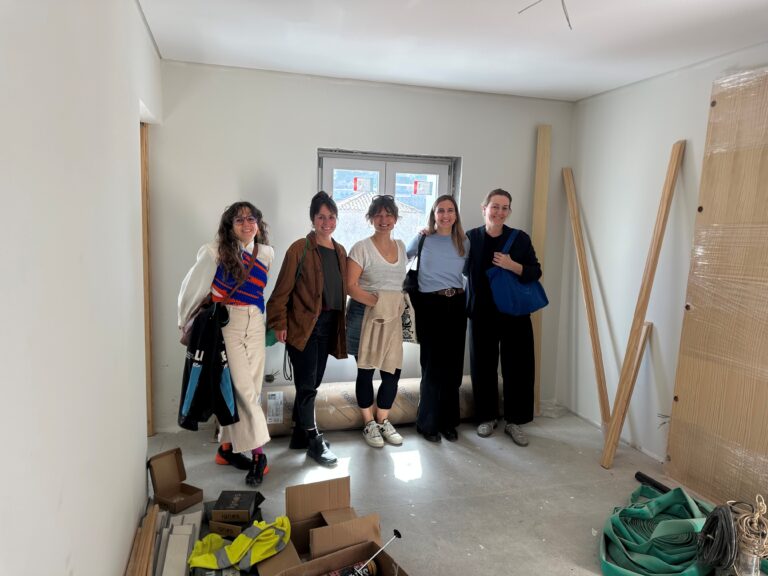
By Paula Ramos (Gaiurb, EM)
The title “From Housing to Habitat” was inspired by the Portuguese programme “Da Habitação ao Habitat” (“From Housing to Habitat”), recognising that housing challenges cannot be addressed solely through the physical aspect of buildings, but rather through a broader relationships involving public spaces, mobility, environmental quality, social inclusion, governance and citizen engagement. This perspective alignes closely with United Nations Sustainable Development Goal 11, which promotes inclusive, safe, resilient and sustainable cities and communities.
Within this framework, the secondment carried out through the DASH project aimed to deepen knowledge and gather examples of urban practices, monitoring governance models and participatory approaches capable of anticipating problems and promoting good practices in housing and urban development.
The secondment took place between October 2025 and May 2026, in three distinct stages (two in Germany and one in Denmark). During this time, the host European cities (Stuttgart, Tübingen, Copenhagen and Potsdam) were visited, and study trips were also made to Berlin and Gießen, due to their significance in terms of urban planning, housing, best practices in mobility and public participation identified during the research process.
Rather than searching for universal solutions, the objective was to understand how different cities have historically responded to urban and housing challenges and how they monitor and evaluate their urban policies, as well as how these experiences may contribute to more sustainable and resilient urban policies.
First lessons in Germany
The secondment started in Tübingen, where Axel Burkhardt served as host. The visit to the Loretto and French Quarter revealed an urban model based on mixed uses, sustainable mobility, the reuse of former military land and the active participation of cooperatives and building groups.
These neighbourhoods became international references due to their capacity to create dense yet human-scale urban environments characterised by local commerce, high-quality public space and social diversity. At the same time, they demonstrate how involving future residents in urban development processes can contribute to solutions better adapted to local needs.
An exploratory tour by the city and the area surrounding the train station revealed the clear integration of non-motorized modes of transportation and public transport into the city’s urban planning, as well as a focus on creating high-quality public spaces.
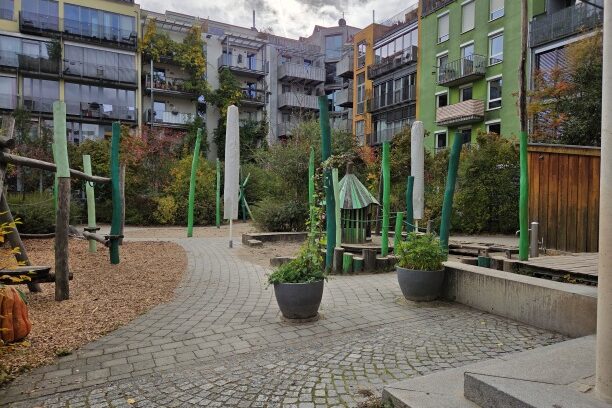
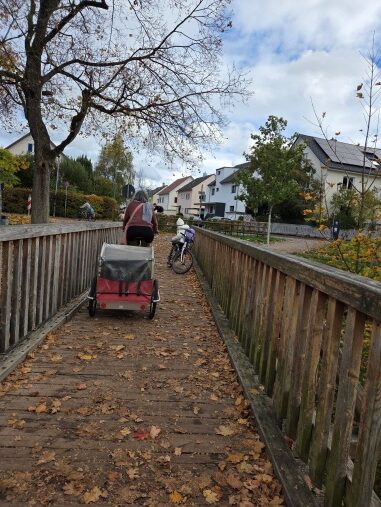
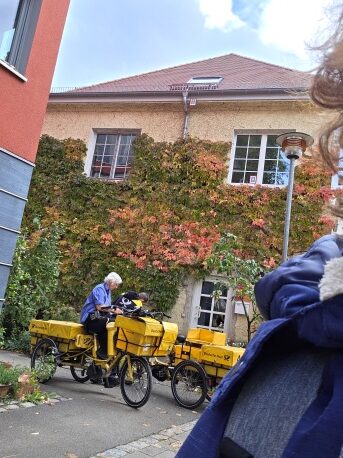
Credits: Paula Ramos, October, 2025
Data management and urban planning
One of the central themes of this experience was the importance of urban monitoring as a tool for urban planning. The capacity to collect data, interpret trends and evaluate impacts plays a crucial role in contemporary urban governance.
In Stuttgart, meetings with the city’s statistical office highlighted the importance of systematic territorial information in supporting urban and housing policies. Demographic analysis, mobility patterns, land use data and housing market evolution are used as tools to support public decision-making.
The “Stuttgart Rosenstein” exhibition also demonstrated that large-scale urban projects require continuous public communication, monitoring and adaptation. The transformation of former railway and industrial areas connected to the “Stuttgart 21,” as well as the visit to the exhibition “Stuttgart–Ulm” illustrate the complexity of contemporary urban operations and the need to integrate environmental, social and economic concerns.
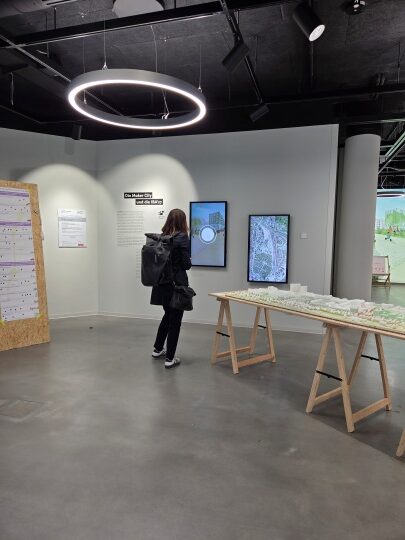
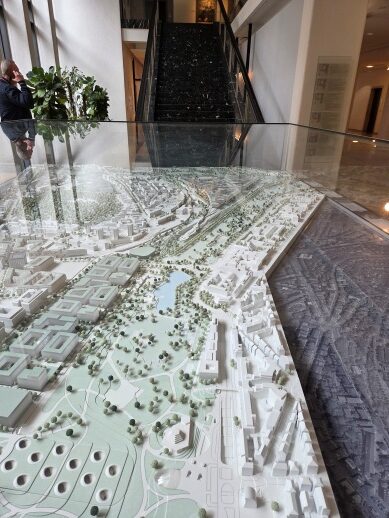
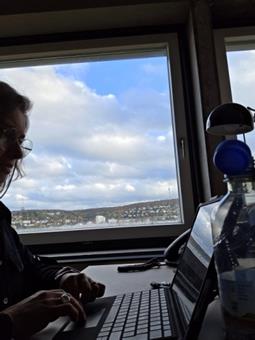
Credits: Paula Ramos, October 2025
Planning the Training school in Porto-Gaia
Participation in the organisation of the studio program organised by the Department of International Urbanism at the University of Stuttgart in cooperation with DASH partners Domus Social and Gaiurb. The objective was to introduce the students and the researchers (Astrid Ley, Sigrid Busch, Els Keunen, Rainer Goutrié, and Shaharin Annisa) to the context of Vila Nova de Gaia. This participation also included explanation about Gaia’s statistical, spatial and alphanumeric data shared and where it can be found in the Gaiurb’s institutional site. Further steps can be found at: Common Ground – Training school in Porto-Gaia
Easter season at Denmark
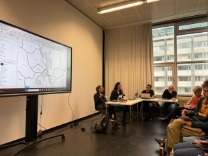
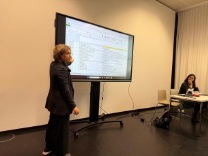
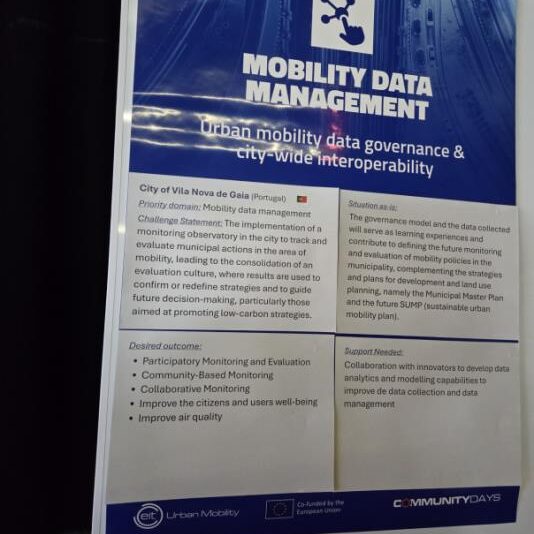
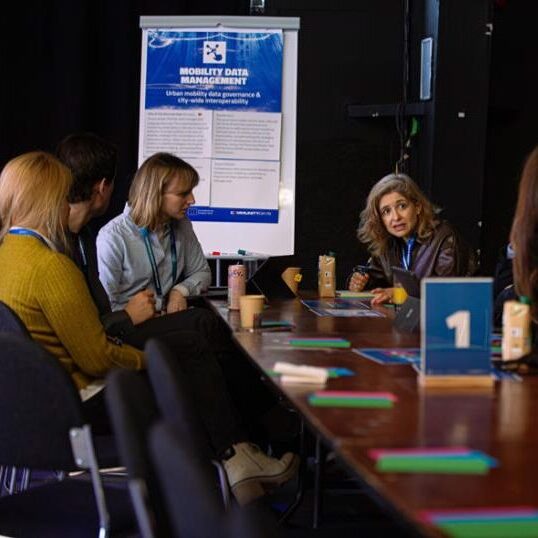
The importance of data management was also evident in Copenhagen. Participation in the Community Days organised by EIT Urban Mobility provided insights into the debates surrounding mobility data interoperability, urban observatories and monitoring systems.
The visit to Nordhavn revealed an integrated approach to contemporary urban planning. This major urban expansion project simultaneously addresses density, liveability, sustainable mobility and climate adaptation. Urban development is accompanied by continuous mechanisms of data collection and analysis mechanisms, which enable strategies to be adjusted and future needs to be anticipated.
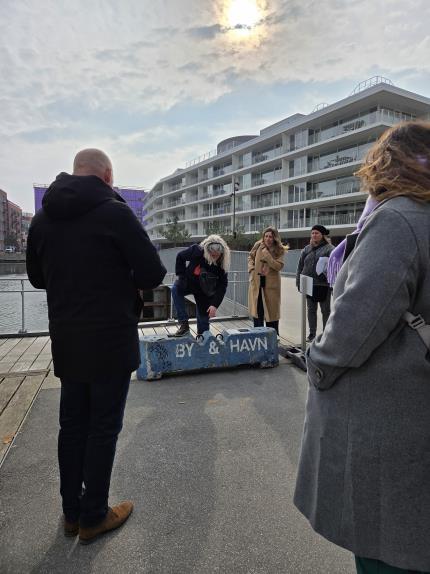
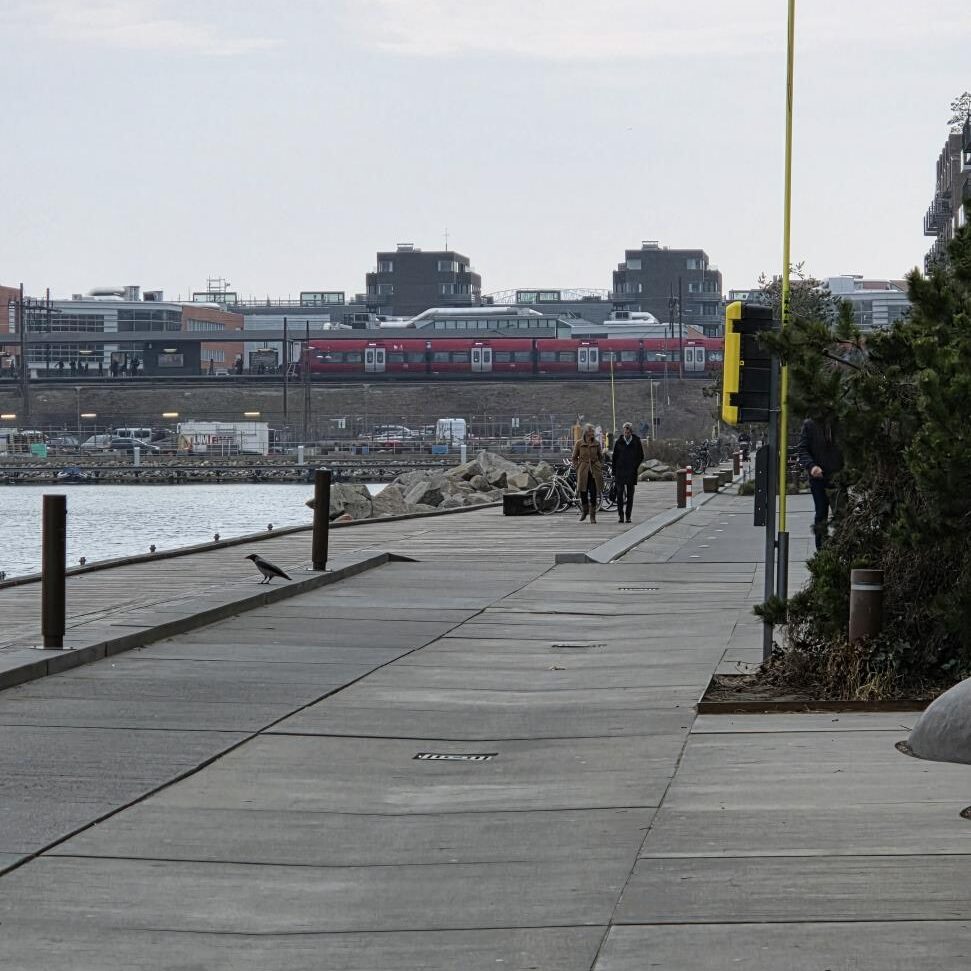
Credits: Paula Ramos, Nordhavn March, 2026
There was a meeting with Rikke Skovgaard Nielsen and Lene Wiell Nordberg at BUILD, the Department of the Built Environment at Aalborg University, which was hosting the meeting in Copenhagen. Alda Botelho, a researcher at ISC-ULisboa and the primary coordinator and team leader for Portugal, was also present at the meeting.
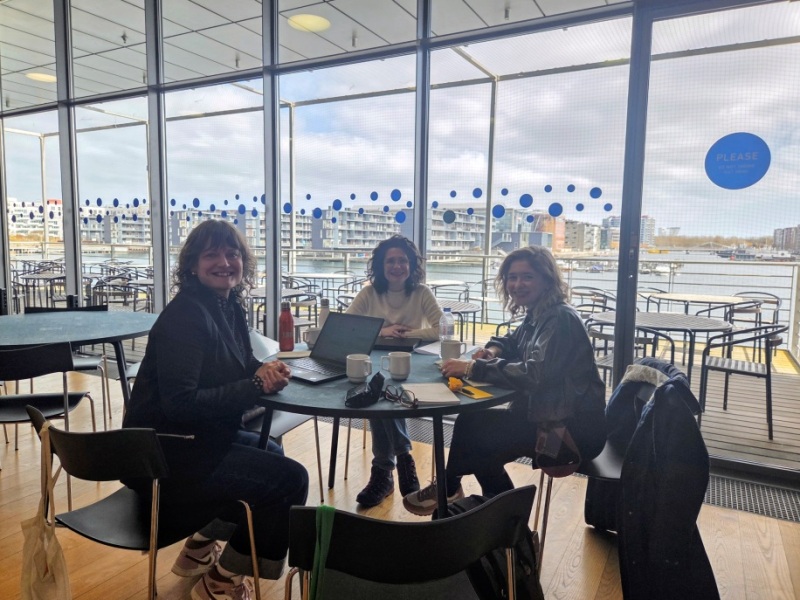
Credits: Lene Wiell Norberg, BUILD, March 2026
These experiences reinforced the idea that monitoring does not simply mean collecting statistical data. Rather, it involves developing the institutional capacity to understand urban transformation processes in real time, identify vulnerabilities and promote more sustainable responses.
Other good examples were identified while exploring the city, in the Carlsberg Byen and in the visit guide tour of the Danish Architecture Center (DAC).
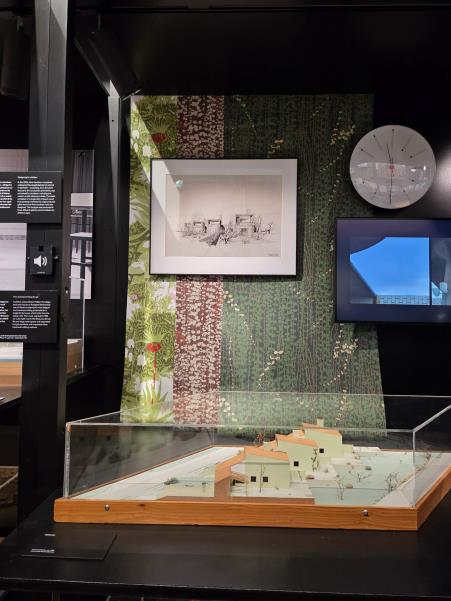
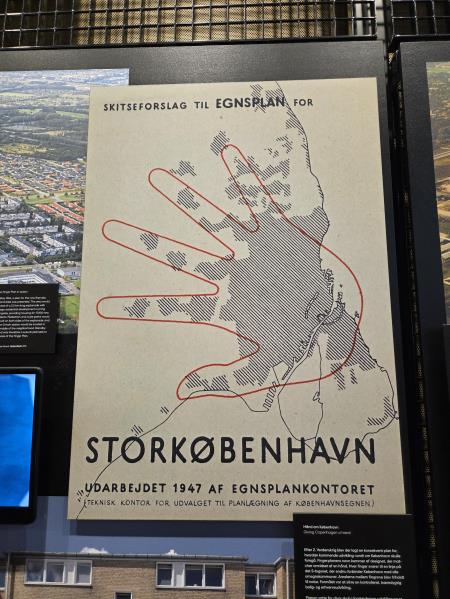
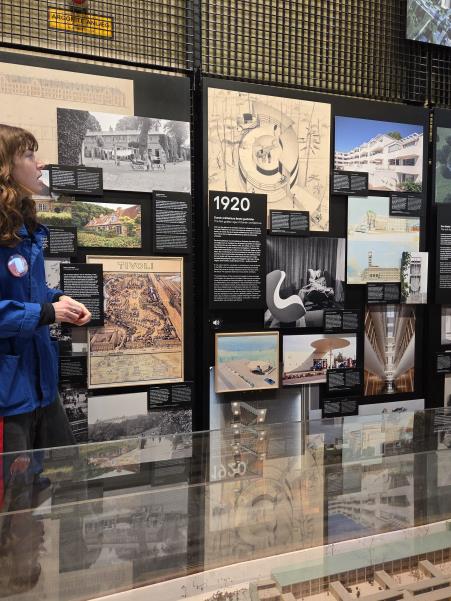
Credits: Paula Ramos, DAC, March 2026
Back to Germany: Good practices and collaborative models
The visit to Potsdam provided an opportunity to see particularly relevant examples of collaborative housing and community involvement. The INWOLE association and the Project House Potsdam-Babelsberg demonstrate how cooperative models can contribute to more inclusive and sustainable ways of living. Beyond housing itself, these projects incorporate workshops, learning spaces, community activities and local services.
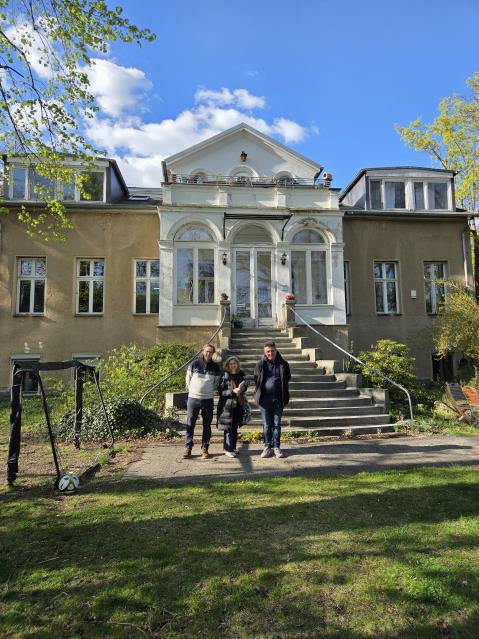
Credits: INWOLE community, April 2026
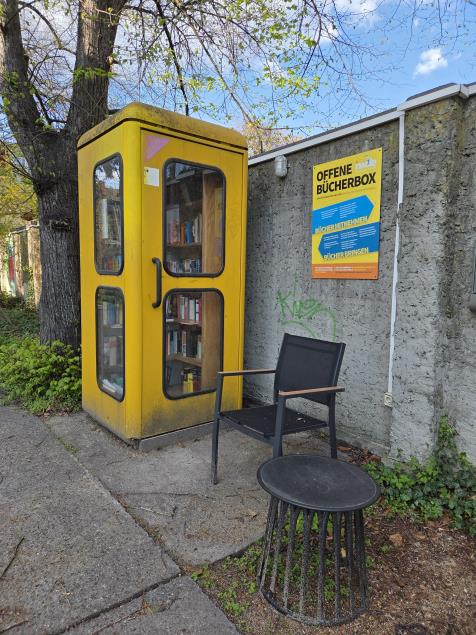
Credits: Paula Ramos, april2026
Particularly relevant was the discussion with Petar Atanackovic and Achim Wamßler about surrounding mechanisms for monitoring activities and assessing their impact on residents’ quality of life. Concern about evaluating social impacts and accompanying collective processes highlights the importance of developing qualitative and participatory indicators within urban governance.
One of the most important lessons from this secondment was the understanding that urban solutions must always be analysed historically and contextually.
The German cities visited reveal different moments of urban transformation: post-war reconstruction, modernist planning, suburban expansion, industrial reuse, contemporary urban regeneration, and sustainable urban development.
The Weissenhof Estate in Stuttgart is a particularly meaningful example of this historical continuity. Built in 1927 as an international laboratory of modern architecture, it continues to function as a residential area today.
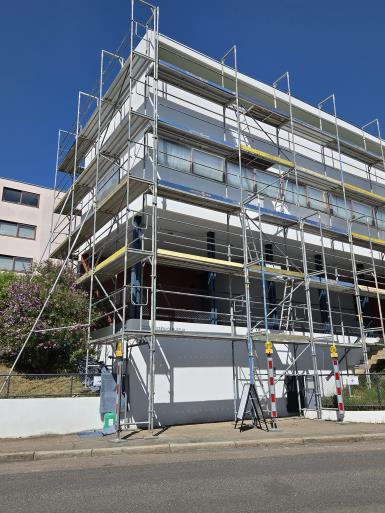
Credits: Paula Ramos, April 2026
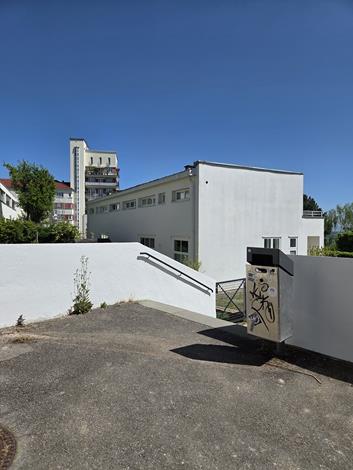
Credits: Paula Ramos, April 2026
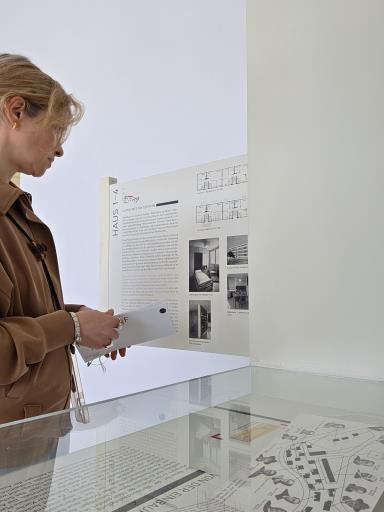
Credits: Paula Ramos, April 2026
Despite criticism and transformations over the decades, the estate remains an international reference point in debates concerning housing quality, construction rationalization and the relationship between architecture and ways of living.
Current preservation and maintenance efforts carried out by residents’ associations also demonstrate the importance of citizen engagement in maintenaning urban and housing heritage.
Finally, the return to the International Urbanism Department at the University of Stuttgart to end the secondment, discuss different perspectives, and plan potential ways to disseminate the DASH project with Sigrid Busch, Els Keunen and Manuel Heckel.
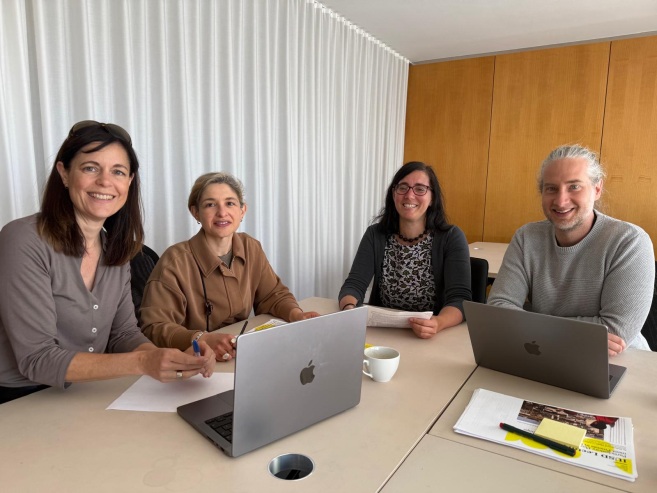
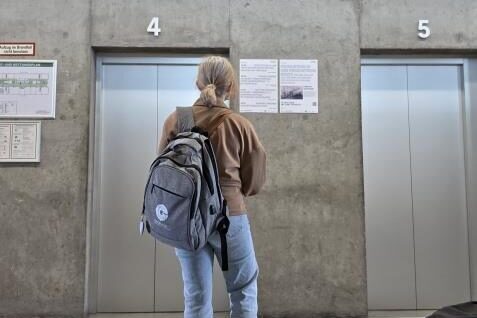
Credits: Städtebau Institute (SI) team, Stuttgart, April 2026
Other lessons: Integrating housing, public space, mobility and citizen engagement
Another important dimension of this secondment was observing the evolution of the integration of housing, public spaces, mobility and public participation throughout the history of urbanism.
Exploratory study visits in Berlin provided the opportunity to observe different urban and housing models developed in distinct historical contexts. Hansaviertel, which was reconstructed after the Second World War for the Interbau exhibition, reflects a modernist vision of the “city of tomorrow”, characterized by functional separation and an emphasis on green spaces.
Karl-Marx-Allee revealed a different urban model associated with monumental post-war architecture in former East Berlin, while Le Corbusier’s Unité d’Habitation demonstrated the search for modern residential solutions based on spatial rationalisation and collective life.
These visits encouraged reflection on how different historical periods responded to urban housing challenges and on the limitations and criticisms associated with many of these models.
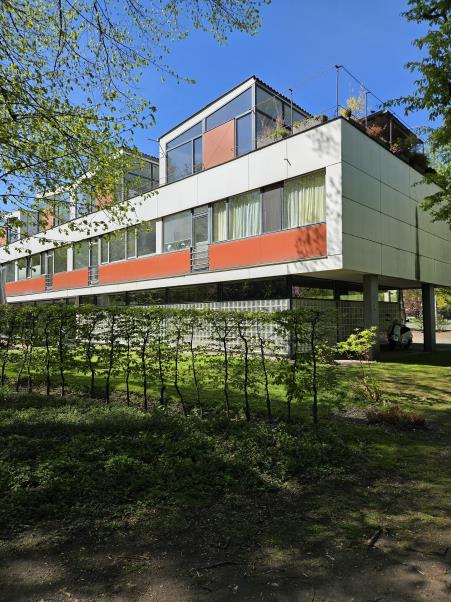
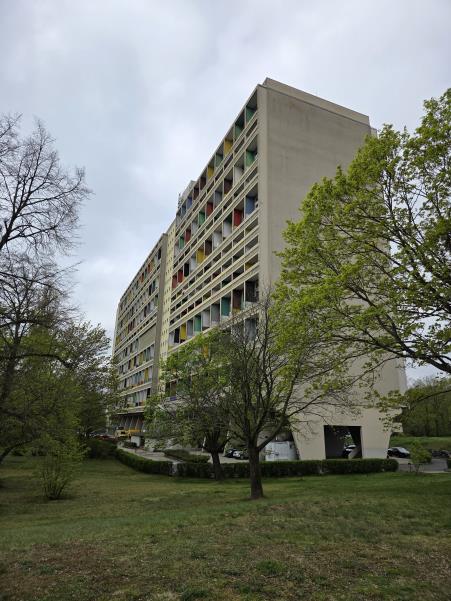
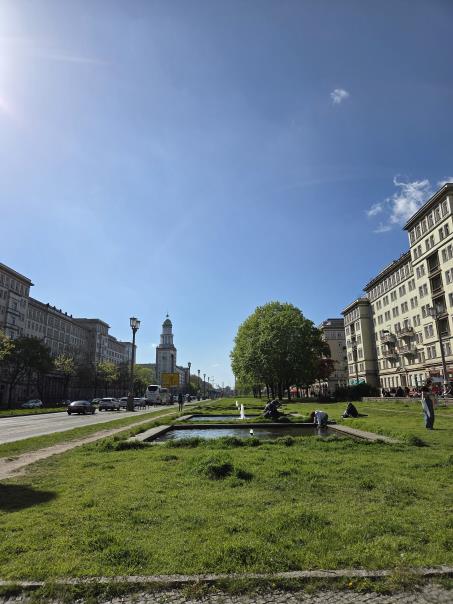
Credits: Paula Ramos, April 2026
The visit to Tempelhofer Feld was particularly significant in terms of citizen engagement. The former airport has become one of Berlin’s most emblematic examples of direct public participation. After facing significant pressure from civic movements, a referendum was organised and citizens rejected plans for partial urbanisation of the area, ensuring its preservation as a fully public open space.
Today, the site hosts community gardens, cultural activities, sports areas and social initiatives developed by the citizens themselves. More recently, due to the housing crisis, discussions concerning the possibility of building housing on the site have re-emerged, illustrating how contemporary urban conflicts require ongoing dialogue, participation and negotiation.
The Friedrichshain-Kreuzberg Museum also highlighted the importance of urban memory, migration and social movements in shaping the contemporary city. Cities are not solely produced through planning documents and architectural projects: they are also constructed through social dynamics, civic movements and everyday urban practices.
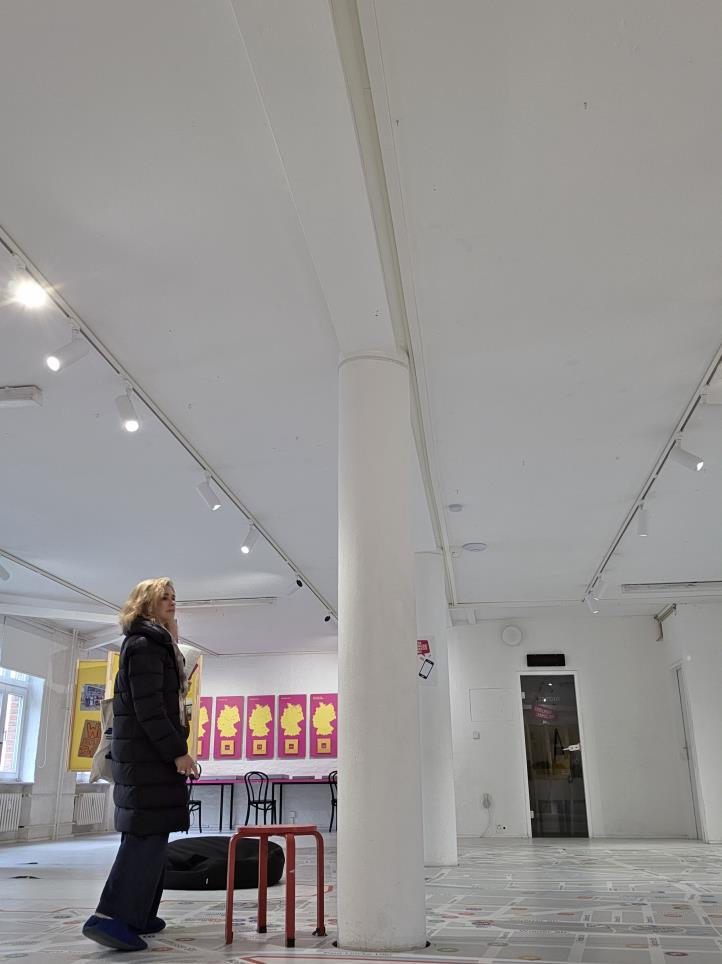
Credits: Paula Ramos, April 2026
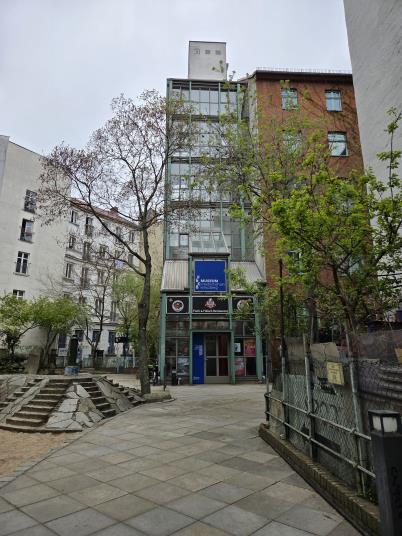
Credits: Paula Ramos, April 2026
In the meantime, I had the opportunity to visit the Berlin’s bid for the 2035 World Expo, which is based on a revolutionary concept led by the ”Global Goals für Berlin“ association: “turning the entire German capital into a decentralized, living exhibition focused on the 17 UN Sustainable Development Goals (SDGs)”. Rather than the traditional model of a single, gated park filled with national pavilions, Berlin’s proposal intends to use the city’s existing infrastructure as an open urban laboratory.
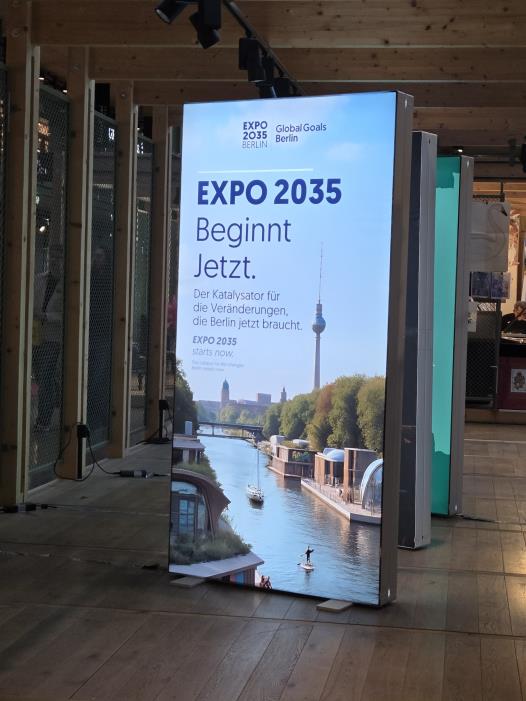
Credits: Paula Ramos, April 2026
The exploratory study visit to Gießen also encouraged reflection on the contemporary challenges faced by university cities. The large student population significantly influences housing markets, mobility systems and the organisation of public spaces. Resistance from part of the population toward some of the Gießen 2035 sustainable mobility strategies, demonstrated once again how essential citizen engagement is within urban transformation processes.
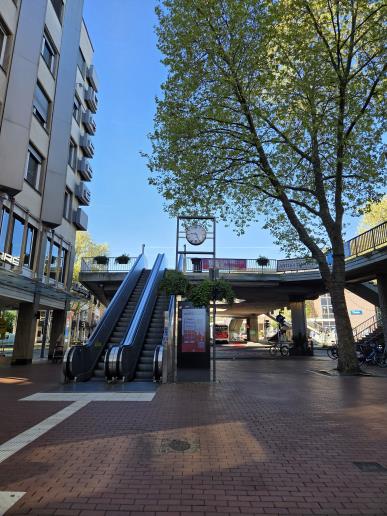
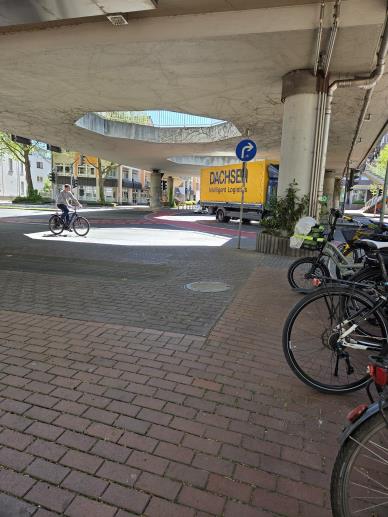
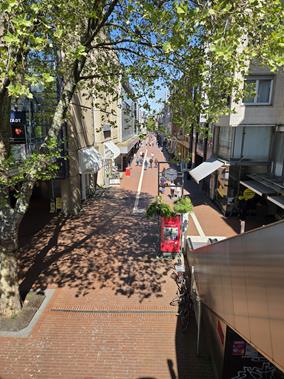
Credits: Paula Ramos, Gießen , April 2026
From Housing to Habitat
Throughout this secondment, it became increasingly evident that contemporary housing challenges cannot be solved by building new structures alone. Questions related to affordability, sustainable mobility, public space quality, social inclusion, citizen engagement and climate adaptation are deeply interconnected.
The transition “from housing to habitat” represents precisely this broader understanding precisely. Rather than just considering houses, it becomes necessary to think about communities, social relations, accessibility, collective well-being and the adaptive capacity of cities.
The experiences observed in these European cities demonstrate that there are no universal solutions. However, they also reveal that more sustainable cities depend on continuous learning processes, monitoring systems, institutional cooperation and citizen engagement.
In this context, the DASH project is particularly relevant because it promotes international learning networks that connect research, urban practice and community involvement. Achieving Sustainable Development Goal 11 requires precisely this integrated approach: understanding the city not simply as a collection of buildings and infrastructures, but as a collective habitat in constant transformation.