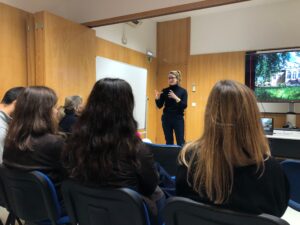
What can we learn about housing by looking beyond our own situated problems and solutions? The journey of Natalia and Achim (Projekthaus Potsdam) to Portugal opened new perspectives on how history and the present shape solutions that go beyond buildings. They grow from connection, shared spaces, and how we live together.
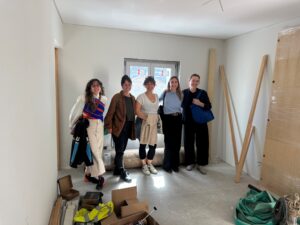
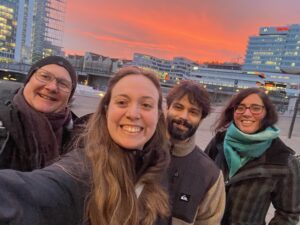
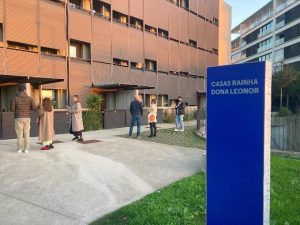
In April, Rikke Skovgaard Nielsen and Lene Wiell Nordberg conducted a secondment in Porto. A very well-organised program by the hosts, Domus Social, allowed us to see a wide range of neighbourhoods and building projects. We also visited Maia, which offers yet another context for the development of affordable, social housing.

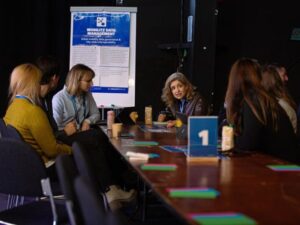
In the course of a secondment in Stuttgart (2–11 February), the Gaiurb DASH team engaged in participatory planning through a negotiation workshop. Furthermore , the team attended the final presentations of the “Common Ground” studios, and visited key housing projects in Stuttgart and Tübingen. The exchange provided insights into social housing, inclusion, and collaborative urban development practices.

From housing to habitat: reflecting on housing, monitoring, participation and sustainable urban development through experiences gathered in Germany and Denmark within the DASH project and the framework of Sustainable Development Goal 11.

During my secondment between Potsdam and Berlin, I explored the Mietshäuser Syndikat model and other community-led housing initiatives. I investigated their approaches to decommodification, collective ownership, affordability and self-management. I also reflected on their potential scalability and relationship with public institutions.

In September, Domus Social organised a session of ‘Lá Fora’, a series of exchange sessions for staff members, in which they invited DASH participant Els Keunen from the University of Stuttgart to give a presentation about social housing in Germany.

In August, Ivana Momic and Aleksandar Jevtic, members of the Serbian Urban Planning Association, visited their colleagues, urban planners from Braga and Porto. After recognising common goals and similar interests in social housing, SUPA’s members decided to visit them to gain insight into the planning documentation and planning practice.

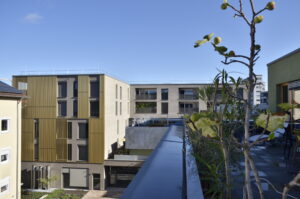
As members of the Housing and Building Sector of a Portuguese cooperative, our research in Tübingen focused on two main perspectives: 1) the role of Dachgeno Wohnen Tübingen as an “umbrella” housing cooperative; and 2) the role of the state in the development of affordable housing through collective-ownership housing cooperatives.

During a one-month secondment in Porto, PhD student Rikke Borg Sundstrup (Aalborg University) explored how the city addresses affordable housing through regeneration projects, public-private partnerships, and preservation of historic housing. Visits and discussions with Domus Social offered new insights into housing policy and the challenges shared across European cities.

A brief overview of the Serbian and Portuguese reality. On the urban transformations of cities and their relationship with housing policies, housing provision, the importance and relevance of public housing, and the urban regeneration process.