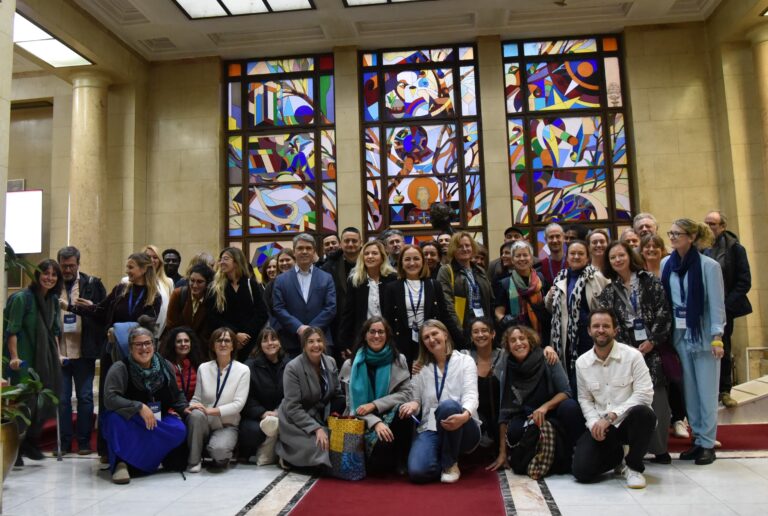
By Zlata Vuksanović-Macura
The programme of the DASH international conference “Deliver sAfe and Social Housing”, held in Belgrade on 28–29 October 2026, is now available with links to presentations.
Explore the programme to revisit the research, experiences and ideas shared during the conference, covering social and affordable housing, housing policies and practices, and challenges across different European contexts.
Click on the links within the programme to access the available presentations.
We thank all speakers for their contributions and for sharing their presentations with a wider audience.
Programme Overview | Wednesday, 28
All times in CET
| Wednesday, 28 October 2026 | |||
| 08:15– 09:00 | Registration Where: Hallway, 2nd floor, Serbian Academy of Sciences and Arts, at Knez Mihailova 35 | ||
| 09:00–11:00 | Opening and Keynotes – Ceremonial Hall (2nd floor) | ||
| 11:00–11:30 | Coffee break (Hallway, 2nd floor) & Room Change | ||
| Ceremonial Hall | Room 2 | Room 3 | |
| 11:30–13:00 | Long-Term Trajectories and European Comparisons | Planning for Social Housing: Part I | Housing Ownership, Policy and Social Need |
| 13:00– 14:00 | Lunch (SASA Club – mezzanine) | ||
| 14:00– 15:30 | From Pre-Socialist to Post‑Socialist Housing | Housing access under pressure | Inclusion: Policy, planning and practice — Part I |
| 15:30– 15:45 | Coffee & Room Change | ||
| 15:45–17:15 | Local Housing Policy in Practice | Planning for Social Housing: Part II | Finance under control? |
| NOTE: The Ceremonial Hall is located on the 2nd floor of the SASA building at Knez Mihailova 35. All other rooms are on the 1st floor. | |||
Detailed Programme | Wednesday, 28
| Wednesday, 28 October | |
| 08:15–09:00 | Registration Where: Hallway, 2nd floor, Serbian Academy of Sciences and Arts, at Knez Mihailova 35 |
| Ceremonial Hall 09:00–11:00 | Plenary – Opening and Keynotes Chair: Zlata Vuksanović-Macura (President of the DASH Conference Scientific & Organisation Committees) Where: Ceremonial Hall, 2nd floor |
| 09:00–09:30 | Welcome and Opening Remarks Zlata Vuksanović-Macura (Geographical Institute „Jovan Cvijić“ SASA, Belgrade) Alda Botelho Azevedo (Universidade de Lisboa, Instituto de Ciências Sociais) |
| 09:30–10:00 | Keynote Talk: From Knowledgeability to Transformative Capacity—Revisiting Structure and Agency through the DASH Experience Sónia Alves (DINÂMIA’CET-Iscte, University Institute of Lisbon, BUILD-Aalborg University) |
| 10:00–10:15 | Q&A |
| 10:15–10:45 | Keynote Talk: Planning for Social Housing—Affordability in the Face of Marketisation in Copenhagen Hans Thor Andersen (Copenhagen, Denmark) |
| 10:45–11:00 | Q&A |
| 11:00–11:30 | Coffee break (Hallway, 2nd floor) & Room Change |
| Ceremonial Hall 11:30–13:00 | Panel: Long-Term Trajectories and European Comparisons Chairs: Petar Atanackovic (INWOLE – Association for Innovative Forms of Housing and Living, Potsdam), Zlata Vuksanović-Macura (Geographical Institute „Jovan Cvijić“ SASA, Belgrade) |
| An interventionist Pathway to the UK Housing Crisis: Learning from Historic Legislation and Contemporary Community-Led Housing Carl Fraser (University of Sheffield, London) | |
| Social Housing in Serbia and Europe: From its Beginning to the Present Day Dijana Džalto Urošević (Ministry of civil engineering, transport and infrastructure, Belgrade), Aleksandra Koneski Mladenović (Standing Conference of Towns and Municipalities, Belgrade) | |
| Built to Last: Layered Visions in Today’s Urban Experience Sara Neves1, Lucas Carneiro1 (1Domus Social, Porto) | |
| Housing is a Verb Nikhil Calas (EPFL-ALICE, Lausanne), Federico Diodato (Ensa Nancy, Nancy) | |
| Discussion | |
| Room 2 11:30–13:00 | Panel: Planning for Social Housing—Part I Chairs: Anne Juel Andersen (Aalborg Municipality), Astrid Ley (Department of International Urbanism and Design, University of Stuttgart) |
| Spatial Patterns of Housing Vulnerability in Serbia: Implications for Social Housing Policy Planning Suzana Lović Obradović1, Stefana Matović1, Nina Ćurčić1 (1Geographical Institute „Jovan Cvijić“ SASA) | |
| Pride and Prejudice: Right to Housing in Post-socialist Urban Development Maria Topolčanská (Academy of Fine Arts, Prague) | |
| Discussion | |
| Which Land for Social Housing? Urban Land Allocation and the Spatial Organisation of Social Reproduction Jovana Timotijević (University of Belgrade–Faculty of Political Science) | |
| Towards a ‘Science of the City’ Manuel Heckel (Department of International Urbanism and Design, University of Stuttgart) | |
| Discussion | |
| Room 3 11:30–13:00 | Panel: Housing Ownership, Policy and Social Need Chairs: Alda Botelho Azevedo1, Pedro Moura Ferreira1 (1Universidade de Lisboa, Instituto de Ciências Sociais) |
| Single-Family Housing in Mid-Sized Serbian Cities: New Development, Constraints, and Social- Housing Measures Branislav Antonić (University of Belgrade–Faculty of Architecture) | |
| Activating Large Single-Family Homes as a Response to Social Housing Shortage Ana Rožman1, Ajda Šeme Rozman1, Robi Koščak1, Oto Kern1,2, Tjaša Kolar1, Tara Sergeja Kadunc1, Boštjan Kerbler1,2 (1Urban Planning Institute of the Republic of Slovenia, Ljubljana; 2New University, European Faculty of Law, Ljubljana) | |
| Affordable but Not Social? Protest, Marketisation and the Limits of Housing Reform in Israel Nir Mualam (Technion – Israel Institute of Technology, Haifa, Israel) | |
| From Owner to Owner(s): A Housing Crisis José António Ferreira (Municipal Space, Urban Renewal and Heritage Management, EM, SA, Maia) | |
| Discussion | |
| 13:00–14:00 | Lunch (SASA Club – mezzanine) |
| Ceremonial Hall 14:00–15:30 | Panel: From Pre-Socialist to Post-Socialist Housing Chairs: Zlata Vuksanović-Macura (Geographical Institute „Jovan Cvijić“ SASA, Belgrade), Petar Atanackovic (INWOLE – Association for Innovative Forms of Housing and Living, Potsdam) |
| Requisitioning as an (Emergency) Substitute for Social Housing in Interwar and Socialist Yugoslavia Aleksandar R. Miletić (Institute for Recent History of Serbia, Belgrade) | |
| At the Margins of Housing Policy: Subtenancy in Late Socialist Sarajevo Aida Ličina Ramić (University of Sarajevo – Institute of History, Sarajevo) | |
| Constitutional Framework of Social Housing in the Republic of Serbia Nataša Rajić (Faculty of Law Novi Sad, University of Novi Sad) | |
| Discussion | |
| Room 2 14:00–15:30 | Panel: Housing Access Under Pressure Chairs: Els Keunen1, Manuel Heckel1 (1Department of International Urbanism and Design, University of Stuttgart) |
| Layered Housing Pressures in a Post-Socialist City: Affordability, Migration and Socio-Spatial Change in Belgrade Nikola Jocić1, Aljoša Budović1, Ivan Ratkaj1 (1University of Belgrade–Faculty of Geography) | |
| Who Stays, Who Moves? Determinants of Post-Renovation (Im)mobility in the Swedish Rental Sector Ana Tramosljanin (Department of Human Geography, Stockholm University, Stockholm) | |
| Municipal Planning Strategies to Housing Challenges: The Case of Braga Filipa Leite (Braga Municipality) | |
| From Post-Socialist Security to Housing Inequality: Housing Tenure, Vulnerability, and Subjective Wellbeing in Slovenia, 2005–2024 Tara Sergeja Kadunc (Urban Planning Institute of the Republic of Slovenia, Ljubljana) | |
| Discussion | |
| Room 3 14:00–15:30 | Panel: Inclusion: Policy, Planning and Practice—Part I Chairs: Rikke Skovgaard Nielsen1, Lene Wiell Nordberg1 (1Aalborg University, Department of the Built Environment, Copenhagen) |
| Beyond Shelter: Social Housing, Inclusion and Everyday Life in Municipal Neighbourhoods of Cascais Alda Botelho Azevedo1, Pedro Moura Ferreira1 (1Universidade de Lisboa, Instituto de Ciências Sociais) | |
| Bridging Policy and Practice: Towards Inclusive Housing Solutions for Roma in the Western Balkans Dejan Marković (University of Belgrade, Faculty of Political Science) | |
| Towards Inclusive Social Housing in East Jerusalem: An Evidence-Based Planning Framework for a Conflict-Affected Urban Context Nidal Asbah (Department of Architecture, Faculty of Art, Design and Architecture, Istanbul Okan University, Istanbul) | |
| Contributions of a Social Housing Data Observatory to the Design of Local Housing Policies Elsa Marques (Domus Social, Porto) | |
| Discussion | |
| 15:30–15:45 | Room Change & Coffee |
| Ceremonial Hall 15:45–17:15 | Panel: Local Housing Policy in Practice Chairs: Alda Botelho Azevedo (Universidade de Lisboa, Instituto de Ciências Sociais), Konstantin Kholodilin (DIW– The German Institute for Economic Research, Berlin) |
| Rethinking Housing Adequacy: Linking Lived Experience to Policy Kelly Davies (King’s College London) | |
| Housing Need Assessment and Policy Responses in Four European Secondary Cities Els Keunen (Department of International Urbanism and Design, University of Stuttgart), Zlata Vuksanović-Macura (Geographical Institute „Jovan Cvijić“ SASA), Marco Allegra (Center for Social Studies of the University of Coimbra) | |
| Rethinking Housing Policies Through Policy Transfer Efe Haşim Sezen (Yildiz Technical University, Faculty of Architecture and Design; Maltepe University, Istanbul), Füsun Çizmeci Yöreş (Yildiz Technical University, Istanbul) | |
| Testing the Limits of Municipal Housing Policy: Evidence from Tübingen Julia Hartmann1, Axel Burkhardt1 (1Universitätsstadt Tübingen) | |
| Discussion | |
| Room 2 15:45–17:15 | Panel: Planning for Social Housing—Part II Chairs: Anne Juel Andersen (Aalborg Municipality), Astrid Ley (Department of International Urbanism and Design, University of Stuttgart) |
| A Comparative Analysis of Planning Systems and Social Housing Models in Denmark, Germany, Portugal, and Serbia Aleksandar Jevtić (Serbian Urban Planners Association; Institute for Urban Planning of Vojvodina), Ivana Momić (Serbian Urban Planners Association; Public Enterprise Urbanism and Construction Leskovac) | |
| Publicly Supported Housing in Novi Sad: Programmes, Spatial Models and the Planning Framework Mirela Manasijević Radojević1, Bojana Kulačin1, Duško Marković1 (1“Urbanism”–Urban Planning Institute Novi Sad) | |
| Discussion | |
| Morphological Density as a Planning Framework for Social Housing: Residential Ensembles of the Twentieth-Century Skopje Ana Rafailovska1, Slobodan Velevski1 (1Faculty of Architecture, University SS. Cyril and Methodius, Skopje) | |
| Absorbing Urban Growth: Demographic Pressure and Housing Quality in Serbia’s Peri-Urban Settlements Marija Drobnjaković1, Vlasta Kokotović Kanazir1, Dejana Đorđević2 (1Geographical Institute „Jovan Cvijić“ SASA; 2Statistical Office of the Republic of Serbia, Belgrade) | |
| Discussion | |
| Room 3 15:45–17:15 | Panel: Finance Under Control? Chairs: Manuel Heckel (Department of International Urbanism and Design, University of Stuttgart), Beatriz Salafranca (Universidade de Lisboa, Instituto de Ciências Sociais) |
| Rolling Windows Closed Doors Adi Tarabeih (Technion – Israel Institute of Technology, Haifa) | |
| Housing Affordability Beyond Subsidy: Structural Solutions to Europe’s Housing Crisis Gerald Koessl (Austrian Federation of Limited-Profit Housing Associations, Vienna) | |
| The Problem of Affordable Housing in Europe. Dilemmas, Approaches and Policy Efforts Iván Tosics (Metropolitan Research Institute, Budapest) | |
| Discussion | |
Programme Overview | Thursday, 29 October
| Thursday, 29 October 2026 | ||
| 08:30–09:00 | Registration | |
| Room 2 | Room 3 | |
| 09:00–10:30 | Housing quality and adaptability: efficiency, comfort, care | Housing affordability: Metrics and policy interventions |
| 10:30–11:00 | Coffee break | |
| 11:00–13:00 | Plural Processes: housing as lived practice | Cooperatives and Community-Based Housing Alternatives |
| 13:00–14:00 | Lunch (SASA Club – mezzanine) | |
| 14:00–15:30 | Housing Policy Instruments and Outcomes | Inclusion: Policy, planning and practice — Part II |
| 15:30–16:00 | Closing Remarks | |
Detailed Programme | Thursday, 29 October
| Thursday, 29 October | |
| 08:30–09:00 | Registration |
| Room 2 09:00–10:30 | Panel: Housing Quality and Adaptability: Efficiency, Comfort, Care Chairs: Sara Neves (Domus Social, Porto), Joana Trindade (Cooperativa Integral Minga, Montemor-o-Novo) |
| New Forms of Affordable Housing Adapted to Climate Change in the City of Porto Olga Feio (Domus Social, Porto) | |
| Beyond Demolition: Adaptive Reuse, Care, and the Future of Ageing Social Housing Asma Mehan (Huckabee College of Architecture, Texas Tech University) | |
| Rooftop Solar as a Tool for Mitigating Energy Poverty: A Feasibility Assessment in Social Housing in Čačak, Serbia Dejan Doljak1, Zlata Vuksanović-Macura1, Gorica Stanojević1, Dragana Miljanović1, Ilija Batas Bjelić2 (1Geographical Institute „Jovan Cvijić“ SASA; 2Institute of Technical Sciences SASA) | |
| Discussion | |
| Room 3 09:00–10:30 | Panel: Housing Affordability: Metrics and Policy Interventions Chairs: Konstantin Kholodilin (DIW– The German Institute for Economic Research, Berlin), Els Keunen (Department of International Urbanism and Design, University of Stuttgart) |
| The Effects of the Twin Transition on Housing and Labour: Interdependencies and Integrated Solutions Barbara Audycka1, Márton Czirfusz2, Simon Fernezelyi2 (1Institute of Applied Social Sciences, University of Warsaw; 2Periféria Policy and Research Center, Budapest) | |
| Who Can Afford the Affordable Housing? Marta Sousa (Nuno Portas Centre for Studies, Faculty of Architecture, University of Porto) | |
| When Housing Stops Representing a Home: Affordability Paradox in Serbia’s Housing Market Aleksandra Terzić1, Jovana Todorić1, Dragoljub Štrbac1, Dragana Konstantinović2 (1Geographical Institute „Jovan Cvijić“ SASA; 2Faculty of Technical Sciences, University of Novi Sad) | |
| The Housing Market in Osijek as an Indicator of Gentrification Ivan Cingel1, Dina Stober1, Nikolina Raguž-Lučić1, Željka Jurković1 (1Faculty of Civil Engineering and Architecture – Josip Juraj Strossmayer University of Osijek) | |
| Discussion | |
| 10:30–11:00 | Coffee break |
| Room 2 11:00–13:00 | Panel: Plural Processes: Housing as Lived Practice Chairs: Sara Neves (Domus Social, Porto), Joana Trindade (Cooperativa Integral Minga, Montemor-o-Novo) |
| Making Housing Systems See: Participatory Knowledge Infrastructures for Inclusive Social Housing Governance Ana Luisa Melo1, Júlia Mello1, Lara Fagundes1 (1CRIA – Centre for Research in Anthropology, Lisbon, Portugal) | |
| The Anatomy of a Shared House Natalia Irina Roman (Bauhaus-University Weimar; INWOLE – Association for Innovative Forms of Housing and Living, Potsdam) | |
| Living Heritage: The Enduring Livability of Socialist Housing Estates in Kragujevac Mirjana Ristić Trogrančić (Archithea, Kragujevac), Lazar Mandić (PC “Urban Planning – Kragujevac”) | |
| From Relocation to Co-Production: Integrating Livelihoods into Community-Based Social Housing: A Case Study of Maligawatta, Sri Lanka Dhanesh Chathuranga (Social Innovation Lab, Colombo, Sri Lanka) | |
| Beyond the Dwelling Unit: the Built Environment as a Material-Institutional Milieu Nejat Dogan (Anadolu University, Eskisehir, Türkiye) | |
| Discussion | |
| Room 3 11:00–13:00 | Panel: Cooperatives and Community-Based Housing Alternatives Chairs: Julia Hartmann1, Axel Burkhardt1 (1Universitätsstadt Tübingen) |
| Making Home Under Financialized Capitalism: Communal-Based Living and Housing Activism in Amsterdam Katariina Kujapelto (University of Helsinki, Helsinki) | |
| Affordable Homes Through Collaboration and Self-Building? Tinna Harling1, Liv Sonntag1, Veronica Hejdelind2 (1Egnahemsfabriken ideell förening, Gothenburg; 2Hejdelinds byrå, Stockholm) | |
| Community-Led Housing in Response to the Housing Crisis: From Precedents to Systemic Solutions Ana Džokić (Association Ko gradi grad; Housing cooperative Pametnija zgrada; MOBA Housing SCE, Belgrade), Milja Vuković (Housing cooperative Pametnija zgrada, Belgrade) | |
| Designing Participation Beyond Consultation: Lessons from Swiss Housing Cooperatives for Resilient Housing Policy Anthony Boanada-Fuchs (Institute for Housing and Urban Development Studies (IHS), Erasmus University, Rotterdam) | |
| Municipal Support for Non-Profit Housing: The Case of the Umbrella Cooperative Tübingen Julia Hartmann1, Axel Burkhardt1 (1Universitätsstadt Tübingen) | |
| Discussion | |
| 13:00–14:00 | Lunch (SASA Club – mezzanine) |
| Room 2 14:00–15:30 | Panel: Housing Policy Instruments and Outcomes Chairs: Alda Botelho Azevedo (Universidade de Lisboa, Instituto de Ciências Sociais), Konstantin Kholodilin (DIW– The German Institute for Economic Research, Berlin) |
| Is the Rental Brake Also a Housing Construction Brake? Konstantin Kholodilin (DIW– The German Institute for Economic Research, Berlin), Michael Voigtländer (Cologne Institute for Economic Research, Köln) | |
| Systematizing Government Interventions for Affordable Housing: Lessons from a Global Review of Supply-Side Policy Tools Anthony Boanada-Fuchs (Institute for Housing and Urban Development Studies (IHS), Erasmus University, Rotterdam) | |
| Taxing Transactions: Real Estate Transfer Taxes and the Spanish Housing Market Kevin P. Boge (Martin-Luther Universität Halle-Wittenberg, Halle (Saale)) | |
| Discussion | |
| Room 3 14:00–15:30 | Panel: Inclusion: Policy, Planning and Practice—Part II Chairs: Rikke Skovgaard Nielsen1, Lene Wiell Nordberg1 (1Aalborg University, Department of the Built Environment, Copenhagen) |
| Responses to the Housing Shortage and Isolation of the Elderly in Porto Elsa Marques (Domus Social, Porto) | |
| Finding Common Ground: Urban Design Studios Providing Ideas for Neighbourhood Regeneration in Porto and Vila Nova de Gaia Sigrid Busch1, Els Keunen1, Shaharin Annisa1, Rainer Goutrié1, Astrid Ley1 (1Department of International Urbanism and Design, University of Stuttgart) | |
| State-Sponsored Unhomeliness: Struggle for Certainty and Privacy in Serbian Social Housing Sara Nikolić1, Igor Išpanović1, Dušanka Milosavljević1 (1University of Belgrade, Institute for Philosophy and Social Theory) | |
| Discussion | |
| 15:30–16:00 | Closing remarks |
Download the programme with links to presentations below.